Living Rail History
We’re restoring and operating five historic Diesel-Electric Locomotives, two are the only survivors of their classes.
Overview
All our locomotives are known as Diesel-Electric. In this type of locomotive, the diesel engine drives a generator, producing electric current. This current is then supplied to electric motors mounted on the axles. These motors are geared to the axles and provide the driving power.
This is in contrast to a car or truck, which use a gearbox and drive shafts to supply the wheels. The main reason for the use of electrical transmission is to provide a flexible drive that can negotiate tight curves, and to allow the drive to supply several sets of wheels without being excessively heavy.
Here in New Zealand, English Electric was a critical part of mid-20th century rail transport and machinery. From planes to power plants and even ships, English Electric helped keep the country moving.
Today, many English Electric locomotives and units remain in various conditions with heritage rail operators around the country and DTG is proud to host the country’s largest collection.
DG 772
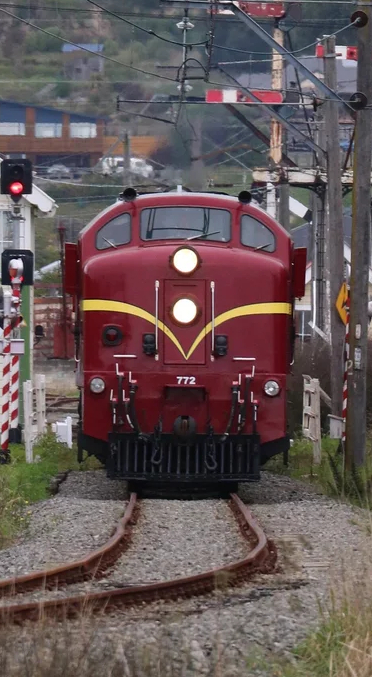
Built to add to the nation's dieselisation efforts, the DG class were the first English Electrics to work extensively throughout the South Island and 772 was first to join DTG. Operating on heritage excursions throughout the 1980s, from 1995 to 2009 it sat in storage until being restored and pairs well with DI 1102 when in use. Our goal is for it to be back on the National Network very soon.
- Manufacturer English Electric Company
- Year Built 1956
- Wheel Arrangement A1A-A1A
- Weight 70 t
- Top Speed 97 km/h
- Fuel Capacity 400 gal (1,800 L)
- Traction Motors EE 525/2A
- Engine EE 6SRKT Mark 2
- Power Output 750 hp (560 kW)
- Withdrawn 1983
- Status Non-Operational, Awaiting Overhaul
DI 1102
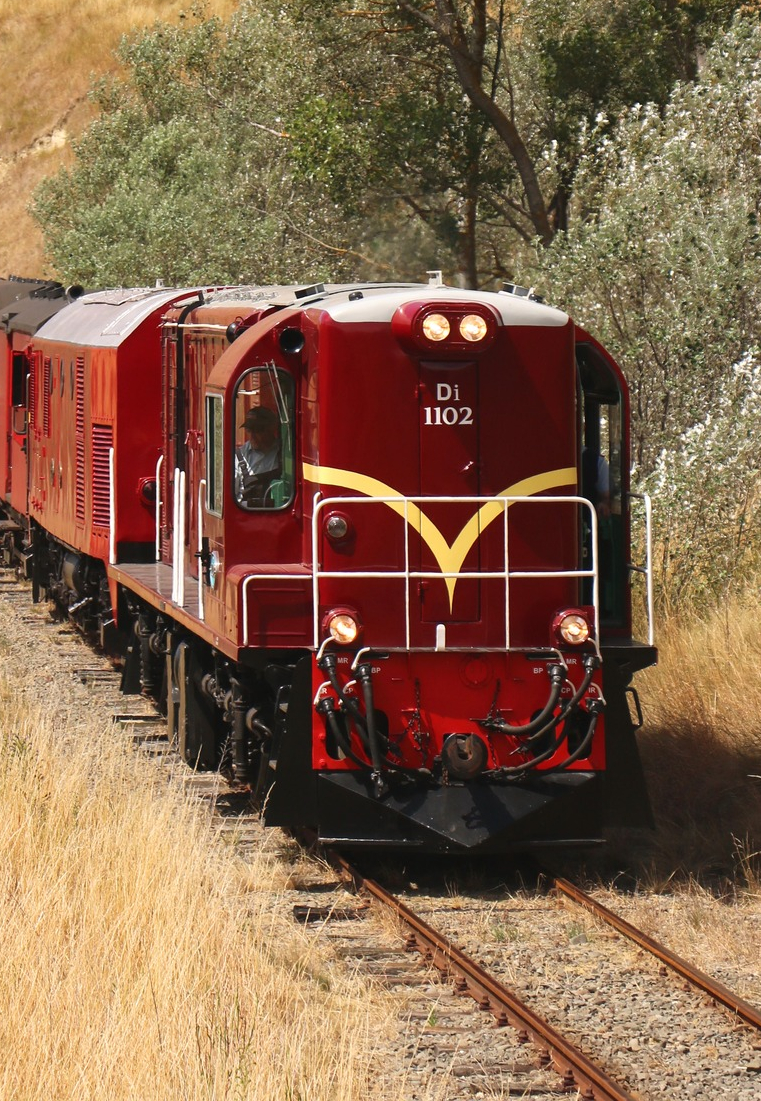
An evolutionary dead end of sorts, the DI class were a prototype for a lightweight class of Diesel-Electrics that could run on main and branch lines in the South Island. Before this could happen the DJ class was selected for this role and only five DI locos were built with 1102 as the only survivor today. Since joining DTG the loco has been restored not only to operation but is the only English Electric locomotive in New Zealand operating on the National Network following restoration with our group.
- Manufacturer English Electric Company
- Year Built 1966
- Wheel Arrangement Co-Co
- Weight 64 t
- Top Speed 97 km/h
- Fuel Capacity 500 imp gal (2,300 L)
- Traction Motors Six EE 540/1A
- Engine EE 6CSRKT Mark 2
- Power Output 1012 hp (755 kW)
- Withdrawn 1989
- Status Operating on the National Network
DE 511 & 512
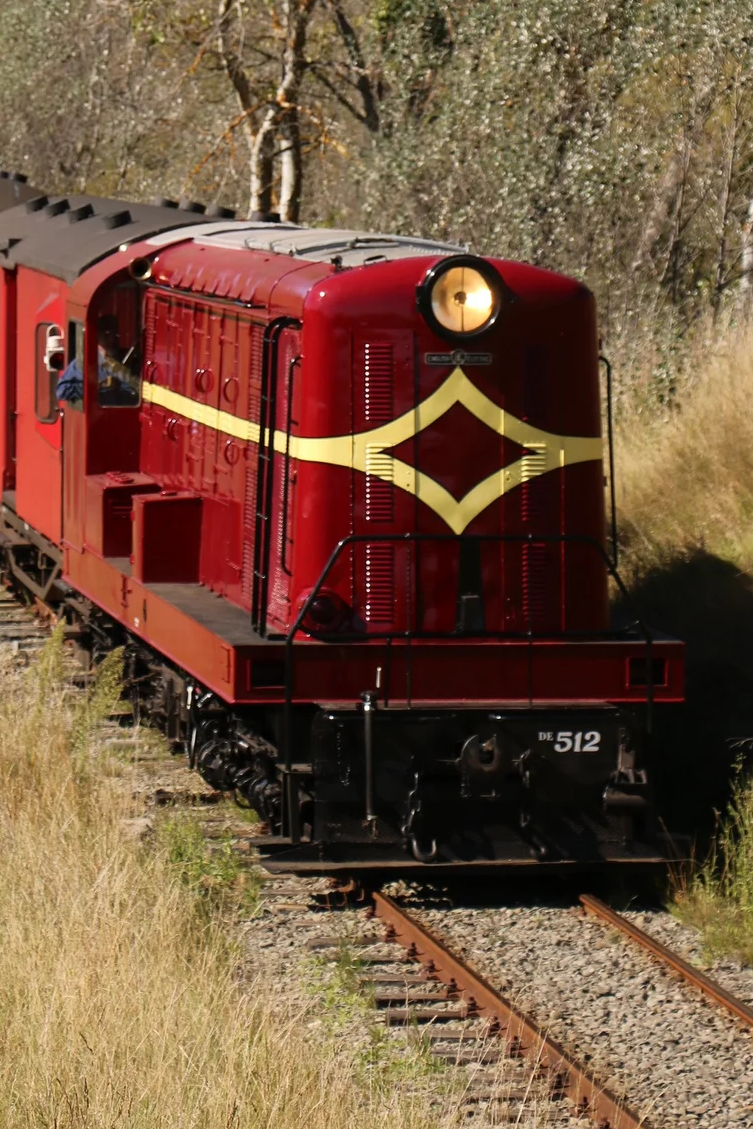
DE locomotives were a class of heavy shunters that proved themselves capable to fill in for other roles and could be seen during their time pulling heavy loads and even the Royal Train in 1953. Since we acquired 511 and 512, they’ve been integral to continue that versatility and whether its pulling work trains at Weka Pass or a shunt at Ferrymead, they’re still great locos when you need something done.
- Manufacturer English Electric Company
- Year Built 1951
- Wheel Arrangement Bo-Bo
- Weight 51.6 t
- Top Speed 89 km/h
- Fuel Capacity 300 imp gal (1,400 L)
- Traction Motors EE 521A
- Engine EE 6SRKT Mark 2
- Power Output 660 hp (490 kW)
- Withdrawn 1987
- Status Operating on the Heritage Railways
DF 1501
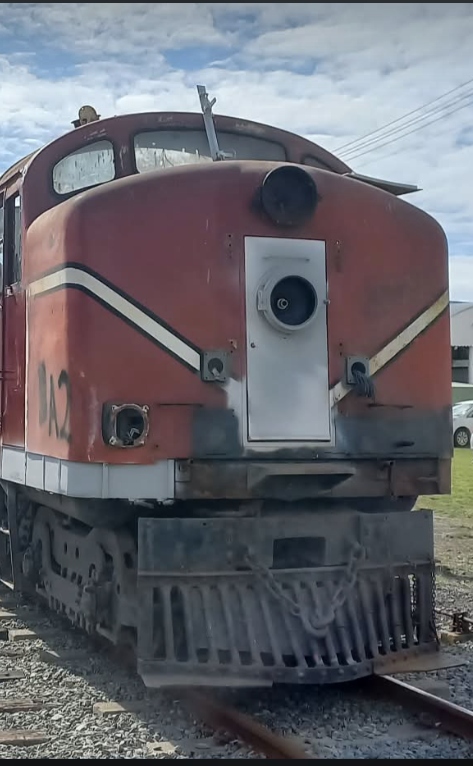
The DF Class were the first Diesel-Electric locomotives built for mainline operations in New Zealand with 1501 as class leader. They would be quickly superseded by other locomotives, their arrival marked a revolution in motive power for the nation. While they had a short operational life, our long term goal is for this historically important loco to be back running.
- Manufacturer English Electric Company
- Year Built 1954
- Wheel Arrangement 2Co-Co2
- Weight 107 t
- Top Speed 97 km/h
- Fuel Capacity 600 gal (2,700 L)
- Traction Motors Six EE 525/2A
- Engine EE 12SVT Mark 2
- Power Output 1500 hp (1,100 kW)
- Withdrawn 1975
- Status Non-Operational, Being Restored
Help Keep Our Locomotives Running
Become a volunteer or donate today to help bring living rail history to communities across the South Island.

Location
Ferrymead Heritage Park, Christchurch, New ZealandReach Us
secretary@dtg.co.nz
© 2025 Diesel Traction Group Inc [CC21966]
Website by